Google Cloud Text-to-Speech: Bringing Your Words to Life with AI
In the vast ecosystem of AI tools, some stand out not for flashy visuals, but for the sheer quality and utility they bring to the table. Google Cloud Text-to-Speech is one such powerhouse. Developed by the tech giant Google, this tool isn’t just another robotic voice generator; it’s a sophisticated API that leverages Google’s deep learning and AI prowess, including technology from DeepMind, to synthesize human-like speech that is remarkably clear, natural, and engaging. It empowers developers and businesses to convert text into lifelike audio, opening up a world of possibilities for applications and user experiences.
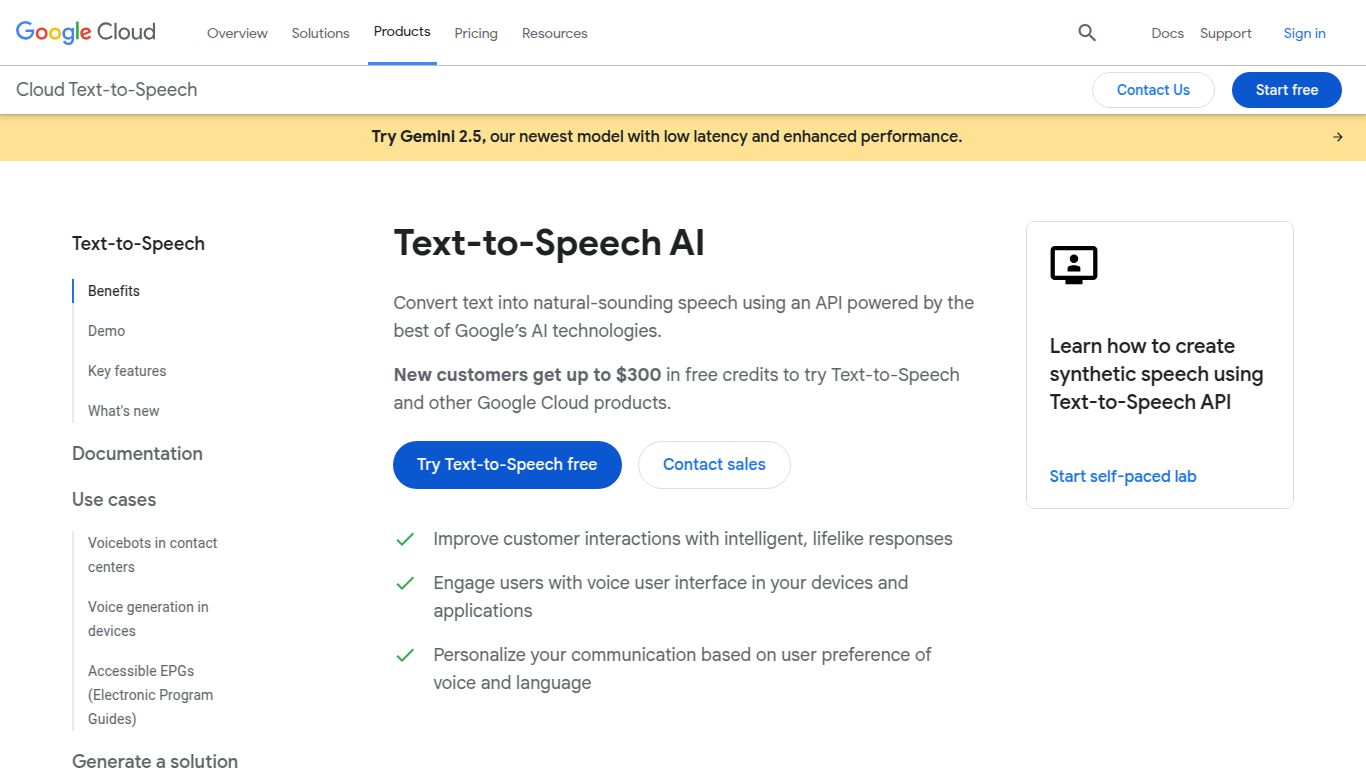
Core Capabilities: The Power of Voice
Google Cloud Text-to-Speech focuses on one thing and does it exceptionally well: Text-to-Audio Synthesis. Its core function is to take written text as input and produce high-fidelity audio output. Unlike multi-modal AI tools, it doesn’t generate images or videos; its entire suite of features is dedicated to creating the most realistic and customizable voice audio possible. This specialized focus allows it to deliver unparalleled quality in the realm of synthetic speech.
Unpacking the Features
- Groundbreaking WaveNet Voices: Move beyond robotic tones. Google uses DeepMind’s WaveNet technology to generate voices with realistic intonation, pitch, and cadence, making them nearly indistinguishable from human speakers.
- Extensive Voice & Language Library: Break down language barriers with a massive selection of over 220 voices across more than 40 languages and variants. You can find the perfect voice and accent to match your brand and audience.
- Custom Voice Creation: Want a unique voice for your brand? The Custom Voice feature allows you to train a unique, high-quality voice model using your own audio recordings, perfect for creating exclusive brand personas.
- Fine-Grained Audio Control: Using Speech Synthesis Markup Language (SSML), you have granular control over the output. Adjust pronunciation, volume, speaking rate, and pitch, and even add pauses or switch voices within the same audio clip.
- Flexible Audio Formats: The API supports a range of popular audio formats, including MP3, Linear-16, and OGG Opus, ensuring compatibility with your existing systems and applications.
Pricing: Flexible and Scalable
Google Cloud employs a developer-friendly, pay-as-you-go pricing model that scales with your needs. There are no upfront commitments or subscription fees, making it accessible for projects of all sizes.
- Generous Free Tier: Each month, you get a significant number of characters processed for free. This typically includes up to 4 million characters for standard voices and 1 million characters for the premium WaveNet voices, which is more than enough for development, testing, or small-scale applications.
- Pay-as-you-go: After you’ve used the free tier, you are billed per 1 million characters of text processed. The pricing varies based on the type of voice used:
- Standard (Non-WaveNet) Voices: The most cost-effective option for standard use cases.
- WaveNet Voices: Priced slightly higher due to their superior, human-like quality.
For the most current and detailed pricing, it’s always best to consult the official Google Cloud pricing page.
Who Is This For? The Ideal User
Google Cloud Text-to-Speech is primarily an API-driven tool, making it a perfect fit for those who want to integrate voice capabilities directly into their products and services. Ideal users include:
- Application Developers: Building apps that require voice feedback, read-aloud features, or voice-guided navigation.
- Contact Center Providers: Creating dynamic, natural-sounding Interactive Voice Response (IVR) systems that enhance customer experience.
- Media & Entertainment Companies: Automating the creation of voiceovers for videos, news articles, or podcasts.
- E-Learning Platform Creators: Converting educational materials into audio lessons to cater to different learning styles.
- IoT and Device Manufacturers: Enabling voice interaction on smart home devices, in-car navigation systems, and other hardware.
- Accessibility Tool Makers: Developing advanced screen readers and other assistive technologies for users with visual impairments.
Alternatives & Comparisons
While Google’s offering is a top contender, the AI voice space is competitive. Here’s how it stacks up against others:
- Amazon Polly & Microsoft Azure TTS: These are the most direct competitors from other major cloud providers. All three (Google, Amazon, Microsoft) offer robust, high-quality, API-driven text-to-speech services with extensive language support and custom voice features. The choice between them often comes down to existing cloud infrastructure, specific voice preferences, or minor pricing differences.
- ElevenLabs: A strong competitor known for its incredibly realistic voice cloning and expressive speech synthesis. While it offers an API, its user-friendly interface also makes it very popular among content creators who want a more direct, hands-on tool.
- Murf.ai & WellSaid Labs: These are excellent alternatives that are more platform-based than API-first. They provide a studio-like web interface, making them ideal for content creators, marketers, and instructional designers who need to produce voiceovers without writing any code. They offer a different workflow centered around a user interface rather than API integration.
In summary, Google Cloud Text-to-Speech is an enterprise-grade solution perfect for developers seeking a reliable, high-quality, and scalable API to power their applications with lifelike voice. Its WaveNet technology remains a benchmark for natural-sounding speech in the industry.