Looker (Google Cloud): Your Intelligent Bridge to Data-Driven Decisions
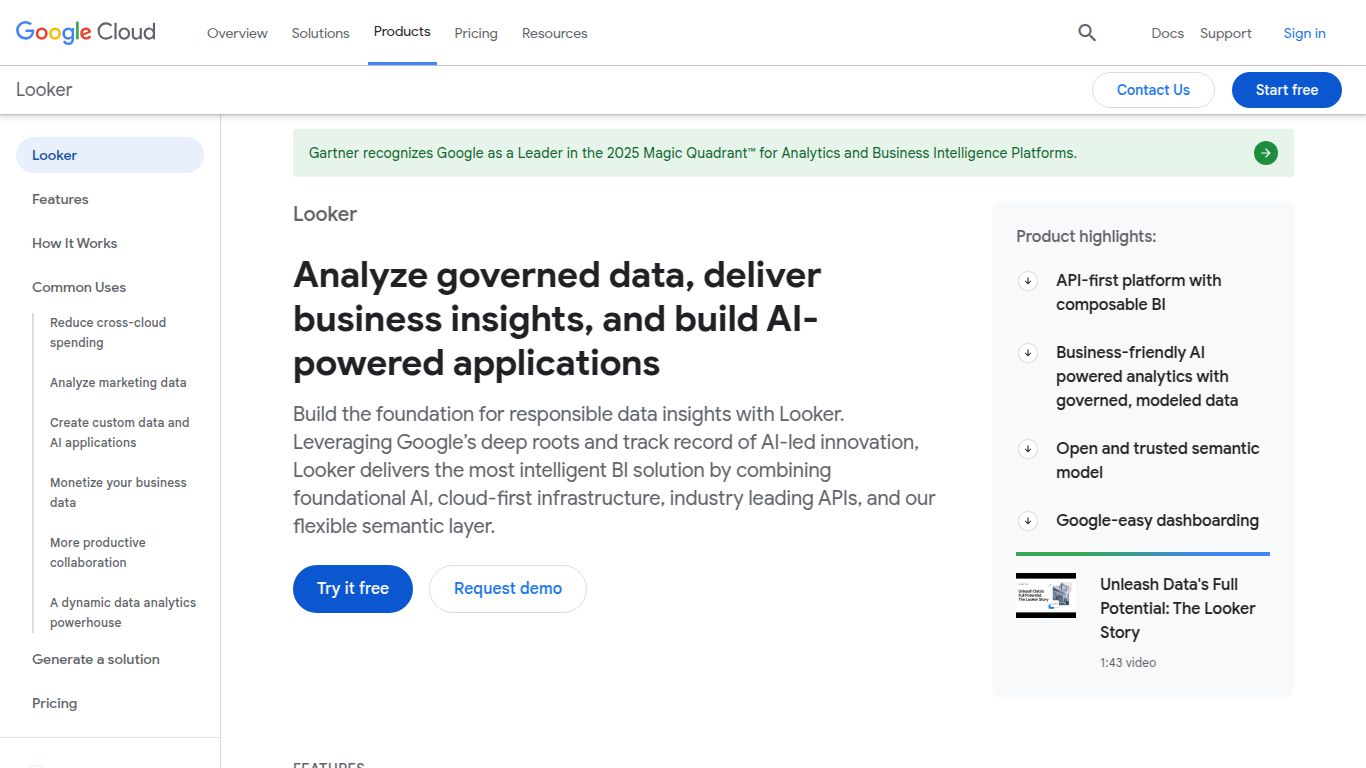
In a world overflowing with data, the real challenge isn’t collecting it—it’s understanding it. Enter Looker, a powerhouse business intelligence (BI) and conversational analytics platform now part of the Google Cloud family. Forget static spreadsheets and confusing reports. Looker is designed to create a dynamic data culture where anyone in your organization can explore, analyze, and share real-time insights with confidence and ease. It acts as a smart, unified layer on top of your existing databases, allowing you to ask sophisticated questions and get immediate, reliable answers, transforming raw data into your most valuable business asset.
What Can You Create with Looker?
While Looker doesn’t generate images or videos in the traditional AI sense, it masterfully generates clarity from complexity. Its core capability lies in transforming raw data into actionable intelligence through several powerful outputs:
- Interactive Dashboards & Visualizations: Build stunning, real-time dashboards that tell a compelling story. From bar charts to geographical maps, Looker turns overwhelming numbers into intuitive visual insights that are easy to digest and share.
- Conversational Analytics & Reports: This is where the magic happens. Using its AI capabilities, you can ask questions in plain English like, “What were our top-selling products in Europe last quarter?” and Looker delivers the answer instantly, complete with charts and data. It’s like having a conversation with your own data.
- Custom Data Applications: Go beyond simple reports. Embed powerful analytics directly into your own applications, customer portals, or internal workflows, providing data-rich experiences for your users and employees.
- Reliable Data Models: At its core, Looker allows you to build a robust, reusable data model using its proprietary language, LookML. This acts as a “single source of truth” for all your business metrics, ensuring everyone is working with consistent and accurate information.
Signature Features of Looker
Looker is packed with features designed for both technical and non-technical users, making data accessible to everyone.
- LookML Modeling Layer: This is Looker’s secret weapon. It’s a powerful, Git-versioned layer where analysts define and manage all business logic centrally. No more inconsistent metrics or duplicated work—just pure, governed data.
- Seamless Google Cloud Integration: As a Google Cloud product, Looker integrates flawlessly with BigQuery, Google Sheets, and other Google services, creating a hyper-efficient and scalable data ecosystem.
- Embedded Analytics: Deliver data directly where it’s needed most. Looker’s robust API and embedding options allow you to white-label and integrate interactive dashboards into any application, providing value-added features for your customers.
- Multi-Cloud Flexibility: Don’t feel locked in. Looker connects to over 50 SQL dialects, allowing you to work with your data wherever it lives, whether it’s on Google Cloud, AWS, Azure, or on-premise databases.
- Action Hub: Looker isn’t just for viewing data; it’s for taking action. Trigger workflows in other applications—like sending a promotional email through Marketo or updating a customer record in Salesforce—directly from your Looker dashboard.
Looker’s Pricing Structure
Looker moves away from a one-size-fits-all pricing model. Instead, it offers customized pricing tailored to your organization’s specific needs. The cost is typically determined by factors such as the number of users, the scale of your deployment, database connections, and the specific edition you choose. They generally offer several editions to suit different use cases:
- Standard Edition: Ideal for smaller teams getting started with modern BI.
- Enterprise Edition: Designed for larger organizations requiring advanced security, governance, and deployment options.
- Embed Edition: Perfect for companies that want to embed Looker analytics into their own commercial products.
To get an accurate price, you’ll need to contact the Google Cloud sales team for a personalized quote that aligns with your business goals.
Who is Looker For?
Looker’s versatility makes it a valuable tool for a wide range of professionals:
- Data Analysts & Scientists: To perform deep, complex analysis, create a reliable data model, and empower the rest of the organization with self-service tools.
- Business Executives & Department Heads: To monitor KPIs, track performance against goals, and make strategic decisions based on up-to-the-minute data.
- Product Managers & Developers: To embed rich analytical features into their applications and understand user behavior in detail.
- Sales & Marketing Teams: To analyze campaign effectiveness, track sales funnels, and identify new opportunities for growth.
- Operations & Support Teams: To monitor operational efficiency, track support tickets, and improve customer satisfaction.
Looker Alternatives & Comparisons
The BI landscape is competitive. Here’s how Looker stands out from its main rivals:
- Looker vs. Tableau: Tableau is renowned for its powerful and intuitive drag-and-drop visualization capabilities. However, Looker’s core strength lies in its centralized LookML modeling layer, which provides superior data governance and consistency, making it a more reliable choice for enterprise-wide deployments.
- Looker vs. Microsoft Power BI: Power BI is a dominant force, especially for companies deeply invested in the Microsoft ecosystem (Azure, Office 365). Looker offers greater flexibility with its multi-cloud support and is often considered to have a more robust and scalable architecture for complex data modeling.
- Looker vs. Metabase/Superset: These open-source alternatives are fantastic for startups and teams on a tight budget. Looker differentiates itself as a premium, enterprise-grade solution offering comprehensive support, advanced security features, and AI-powered conversational analytics that you won’t find in most open-source tools.
In essence, if your priority is creating a governed, single source of truth that empowers your entire organization to “speak data,” Looker’s unique modeling-centric approach gives it a powerful edge.