Oracle Analytics Cloud — AI Assistant: Your Intelligent Data Partner
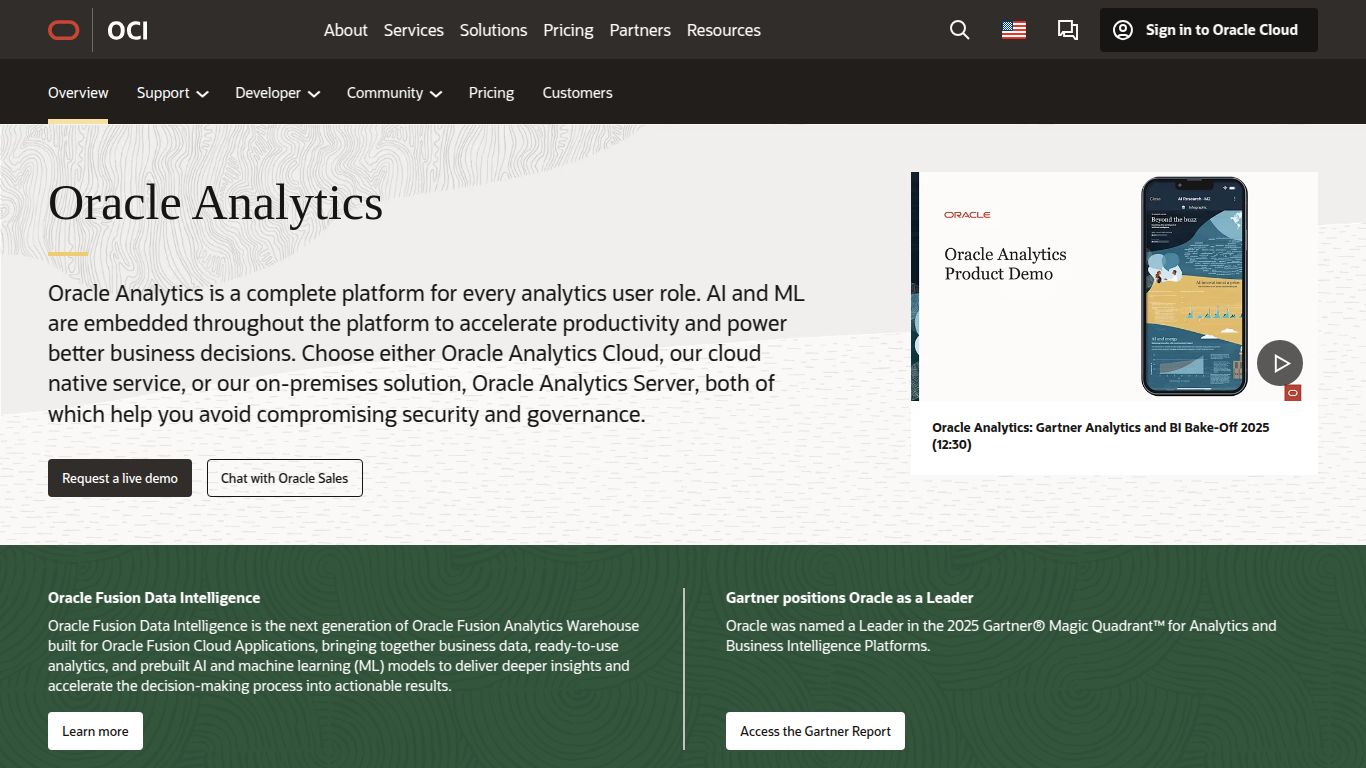
In the vast world of data, finding clear, actionable insights can feel like searching for a needle in a haystack. Enter Oracle Analytics Cloud (OAC), a comprehensive cloud-native analytics platform developed by the tech giant, Oracle. At its core is the powerful AI Assistant, a feature designed to democratize data analysis. Instead of complex code and queries, you can now have a simple conversation with your data. This AI-driven tool allows users to ask questions in plain English, automatically generate stunning visualizations, and uncover hidden patterns, transforming raw data into strategic business intelligence with unprecedented ease and speed.
Core Capabilities: Data-Driven Generation
Unlike creative AI tools focused on media, the Oracle AI Assistant’s capabilities are centered on interpreting and presenting data. It excels in:
- Text & Narrative Generation: It can automatically generate summaries and explanations for your data visualizations. Ask “Why did sales increase in Q3?” and it will provide a concise, natural language explanation based on the available data, highlighting key drivers and trends.
- Intelligent Data Visualization: This is its superpower. Simply type a request like “Show me the top 5 products by revenue in the West region as a bar chart,” and the AI Assistant will instantly generate the appropriate chart or graph. It understands context and chooses the best visualization format for your query.
Key Features That Set It Apart
- Natural Language Query (NLQ): The cornerstone of the AI Assistant. It eliminates the need for SQL or complex formulas, allowing anyone to explore data by simply asking questions.
- Proactive Auto-Insights: The system doesn’t just wait for your questions. It proactively analyzes your datasets and suggests interesting correlations, outliers, and trends you might have missed.
- Data Storytelling: Seamlessly weave visualizations and AI-generated narratives into compelling dashboards and reports that tell a clear and impactful story.
- Embedded Machine Learning: OAC includes built-in machine learning and predictive analytics capabilities. You can easily perform “what-if” analysis and generate forecasts without needing a dedicated data science team.
- Seamless Integration: Being an Oracle product, it integrates flawlessly with Oracle databases, applications (like NetSuite and Fusion Cloud), and other data sources, providing a unified view of your entire business.
Pricing Structure
Oracle Analytics Cloud offers a flexible pricing model based on usage, allowing businesses to scale as they grow. The primary options are:
- Professional Edition: Designed for smaller teams and individual users. It provides self-service analytics and data visualization capabilities, billed per user per hour or on a monthly basis.
- Enterprise Edition: A comprehensive solution for large organizations, including all features of the Professional Edition plus advanced data preparation, enterprise reporting, and more robust governance and security features.
- Pay As You Go (PAYG): A flexible option where you pay only for the resources you consume (per OCPU per hour). This is ideal for businesses with fluctuating analytics needs.
For precise, up-to-date pricing and customized quotes, it is recommended to contact the Oracle sales team directly through their official website.
Ideal User Profiles
This tool is built for a wide range of professionals who need to make data-driven decisions:
- Business Analysts: To rapidly explore data, validate hypotheses, and create reports without being bottlenecked by IT.
- C-Suite Executives (CEOs, CFOs): To get high-level, real-time answers to critical business questions during meetings or on the go.
- Marketing Managers: To analyze campaign performance, customer segmentation, and marketing ROI with ease.
- Sales Leaders: To track sales pipelines, forecast revenue, and identify top-performing regions or representatives.
- Data Scientists: To perform quick exploratory data analysis before diving into more complex modeling.
Alternatives & Competitive Landscape
Oracle Analytics Cloud operates in a competitive business intelligence market. Here are some key alternatives:
- Microsoft Power BI: A market leader known for its deep integration with the Microsoft ecosystem (Azure, Office 365). Its AI features, including Q&A and Copilot integration, make it a formidable competitor.
- Tableau (Salesforce): Renowned for its best-in-class, intuitive data visualization capabilities. Its “Ask Data” feature offers similar natural language query functionality.
- Looker (Google Cloud): A powerful platform focused on creating a governed, single source of truth for data. It’s highly valued for its data modeling layer (LookML) and integration within the Google Cloud Platform.
- Qlik Sense: Differentiates itself with its unique Associative Engine, which allows users to explore data in any direction without being limited to predefined query paths.
In comparison, Oracle’s key strengths lie in its seamless integration with the vast Oracle ecosystem, robust enterprise-grade security, and powerful built-in machine learning capabilities that go beyond simple visualization.