OpenAI Codex: Your AI Pair Programmer for Accelerated Development
Welcome to the future of coding, where your ideas can be translated into functional code almost instantly. Developed by the pioneering team at OpenAI, the minds behind groundbreaking models like GPT-4 and DALL-E, OpenAI Codex stands as a revolutionary AI system designed to understand and generate code. It’s not just an autocomplete tool; it’s a collaborative partner that can significantly boost productivity, streamline workflows, and make programming more accessible than ever. Codex is the foundational model that powers the widely acclaimed GitHub Copilot, acting as a bridge between human language and machine-readable instructions.
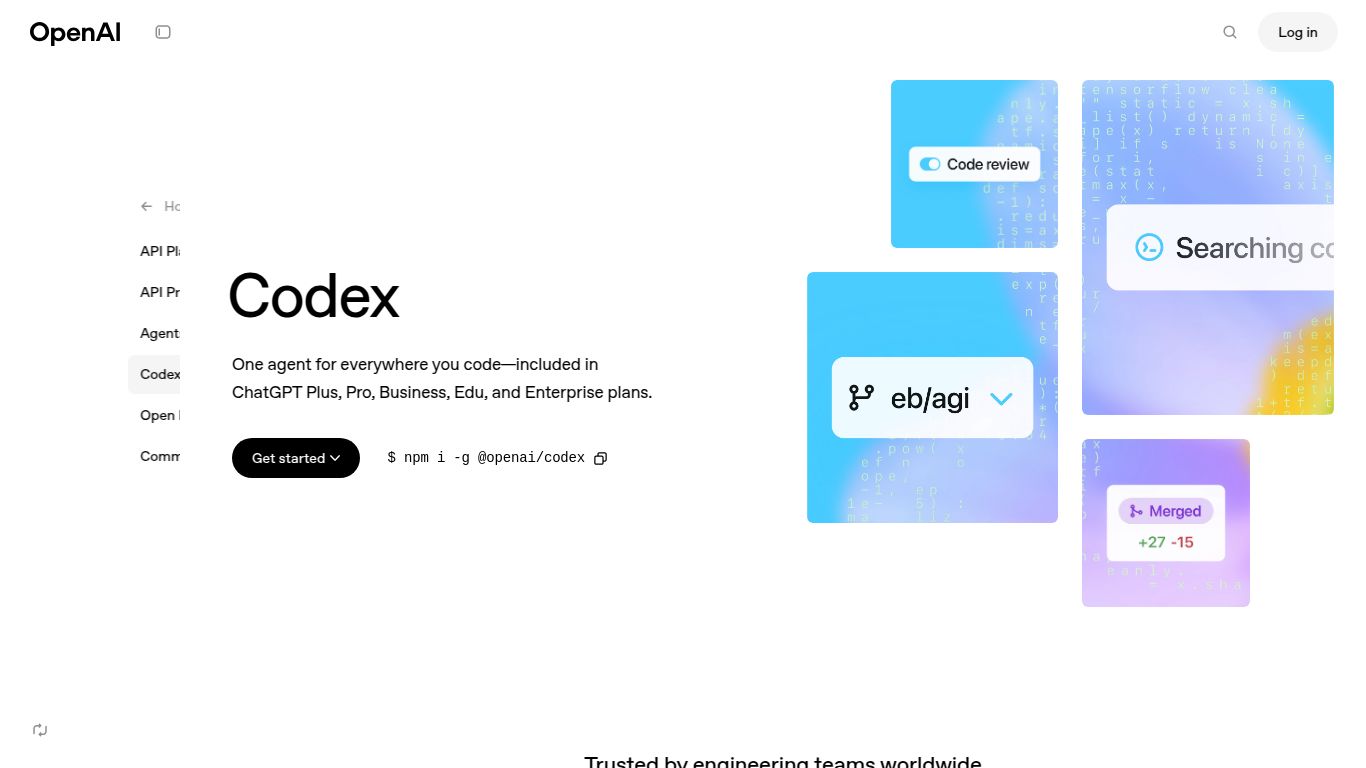
Core Capabilities: More Than Just Code
While OpenAI Codex is a master of code, its capabilities are rooted in its profound understanding of text and context. It primarily excels in generating and manipulating text-based content, with a hyper-focus on programming languages.
- Code Generation: This is its flagship capability. Describe a function in plain English—for example, “create a Python function to fetch weather data from an API”—and Codex will write the code for you. It handles everything from simple scripts to complex algorithms.
- Text Completion & Refactoring: Already have code? Codex can complete your lines, suggest more efficient ways to write a function, or even refactor entire blocks of code for better readability and performance.
- Language Translation: Seamlessly translate code from one programming language to another. Need to convert a legacy JavaScript function into modern Python? Codex can handle it with remarkable accuracy.
- Explanation & Debugging: Stuck on a complex piece of code you didn’t write? Ask Codex to explain it to you in natural language. It can also help identify potential bugs and suggest fixes, acting as an instant code reviewer.
Standout Features
What truly sets Codex apart is its powerful and intuitive feature set, designed to integrate seamlessly into a developer’s workflow.
- Multi-Language Proficiency: While exceptionally skilled in Python, Codex is fluent in over a dozen languages, including JavaScript, Go, Perl, PHP, Ruby, Swift, TypeScript, and SQL.
- Deep Contextual Awareness: The model doesn’t just look at the current line; it analyzes the entire context of your file, including comments and surrounding functions, to provide highly relevant and accurate suggestions.
- Natural Language Interface: The ability to use plain English as your primary input method lowers the barrier to entry and speeds up the development process. You think it, you type it, Codex builds it.
- Flexible API Access: Developers can integrate the power of Codex and its successor models directly into their own applications, websites, and tools through the OpenAI API, creating novel and powerful user experiences.
Pricing & Access Plans
The original standalone “Codex” model has been integrated into and superseded by newer, more powerful models available through the OpenAI API. Access is primarily handled in two ways:
- OpenAI API (Pay-as-you-go): For developers wanting to build custom applications. You get access to models like GPT-4, which have advanced coding capabilities. Pricing is based on token usage (the pieces of words used for processing). This offers maximum flexibility, as you only pay for what you use, making it suitable for projects of all sizes.
- GitHub Copilot (Subscription-based): This is the most popular and direct way to experience Codex’s power. GitHub Copilot is an IDE extension powered by the latest OpenAI models. It offers monthly and yearly subscriptions.
- Copilot Individual: Typically around $10 per month or $100 per year, offering a full-featured AI pair programmer for individual developers, freelancers, and students.
- Copilot Business: Priced around $19 per user per month, this plan includes additional features for organizations, such as policy management and enhanced security.
Who Is It For? The Ideal User
OpenAI Codex is a game-changer for a wide range of individuals in the tech space:
- Software Developers (All Levels): From junior developers learning the ropes to senior engineers tackling complex systems, Codex helps write boilerplate code, debug issues, and explore new libraries faster.
- Data Scientists & Analysts: Quickly generate scripts for data manipulation, visualization, and model training in languages like Python and R.
- Students & Educators: An incredible learning tool that provides instant examples, explains complex algorithms, and helps students overcome coding hurdles.
- DevOps & System Admins: Automate scripting tasks, write configuration files, and manage infrastructure with greater speed and efficiency.
- Hobbyists & Prototypers: Rapidly build and test new ideas, turning a concept into a working prototype in a fraction of the time.
Alternatives & Comparisons
While Codex is a leader, the AI coding assistant space is growing. Here are some key alternatives:
- Tabnine: A popular alternative known for its exceptional speed and privacy-focused features. Tabnine can run locally on your machine or in the cloud, offering a high degree of customization and security, which is a major draw for enterprise teams.
- Amazon CodeWhisperer: Amazon’s direct competitor, CodeWhisperer, is deeply integrated into the AWS ecosystem. It excels at generating code for use with AWS services and includes a reference tracker to help identify code that may resemble open-source training data.
- Replit AI: Formerly Ghostwriter, Replit AI is built directly into the Replit online IDE. It offers a seamless, all-in-one platform for coding, collaboration, and deployment, making it an excellent choice for web developers and those who prefer a browser-based environment.
In summary, while alternatives offer unique strengths, OpenAI Codex (primarily through GitHub Copilot) remains the benchmark for its sheer power in understanding natural language and generating high-quality, context-aware code, making it an indispensable tool for modern development.