What is Open Deep Research (OSS)? A Deep Dive into Autonomous AI Research
In a world flooded with information, finding deep, meaningful insights can feel like searching for a needle in a digital haystack. Enter Open Deep Research (OSS), a groundbreaking open-source framework developed by the brilliant minds at LangChain AI. This isn’t just another search engine; it’s a sophisticated multi-agent system designed to automate the entire research process. Imagine deploying a team of specialized AI agents—a researcher, a critic, and a writer—that work together tirelessly to explore a topic, analyze findings, and synthesize them into a comprehensive, well-structured report. That’s the power Open Deep Research puts at your fingertips.
Core Capabilities: Beyond Simple Search
Open Deep Research is a text and data powerhouse. Its capabilities are focused on the intellectual heavy lifting of the research process, moving far beyond simple keyword lookups to deliver true understanding.
- Automated Text & Web Research: The framework autonomously scours the web, identifies relevant sources, and extracts key information on any given topic.
- Information Synthesis & Report Generation: Its core strength lies in its ability to not just gather data, but to understand, synthesize, and structure it into a coherent and detailed report in formats like Markdown.
- Critical Analysis: Unlike many tools, it incorporates a “critique” step, where an AI agent reviews the initial findings for biases, gaps, and inaccuracies, ensuring a more robust final output.
While its focus is laser-sharp on text-based research, it is not designed for direct image, video, or audio generation.
Key Features That Set It Apart
What makes Open Deep Research a game-changer for developers and researchers? It’s all in the architecture and flexibility.
- Multi-Agent Architecture: The framework’s design mimics a human research team. Different agents with specialized roles collaborate, leading to a more thorough and well-vetted outcome than a single-agent approach.
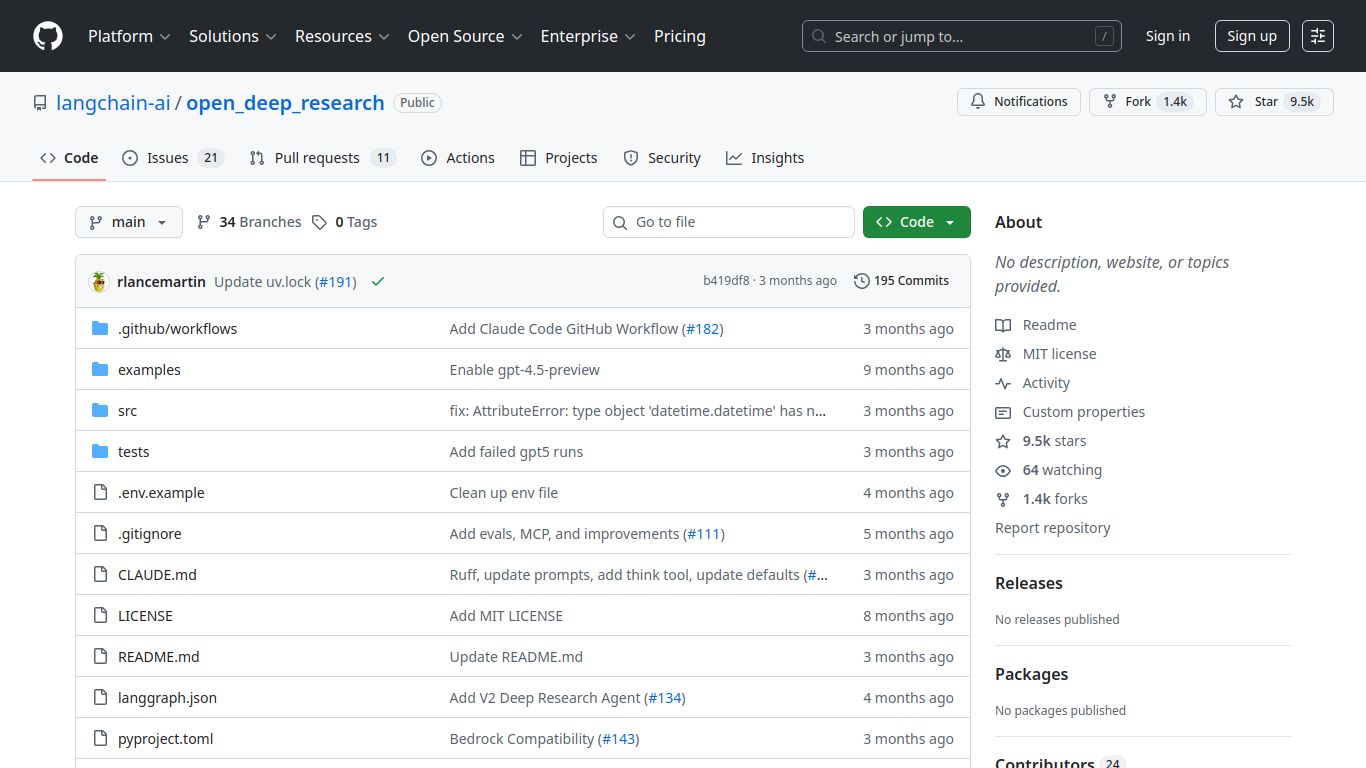
- Open-Source & Fully Customizable: As an open-source project on GitHub, you have complete freedom. You can inspect the code, modify the agents’ prompts, and integrate it into your own custom applications without any restrictions.
- Broad LLM Integration: You are not locked into a single AI model. Open Deep Research is built to be model-agnostic, allowing you to plug in your preferred large language models from providers like OpenAI, Anthropic, Google, and more.
- Deep Dive Methodology: It’s designed to produce a comprehensive report, complete with an outline, detailed sections, and synthesized insights, saving you countless hours of manual labor.
Pricing: The Power of Open Source
This is where Open Deep Research truly shines. As an Open Source Software (OSS), the framework itself is completely free. You can download, use, and modify it without any subscription fees or licensing costs.
However, it’s important to understand that the tool relies on external APIs to function. Therefore, your operational costs will be based on your usage of these third-party services:
- LLM API Costs: You will incur charges from your chosen AI model provider (e.g., OpenAI for GPT-4 usage) based on the amount of processing required for your research.
- Search API Costs: The framework uses search tools like the Tavily API to browse the web, which may have its own usage-based pricing.
This model gives you ultimate control over your spending—you only pay for what you actually use.
Who Should Use Open Deep Research?
This tool is built for those who are comfortable working with code and want to build powerful, customized research solutions. It’s an ideal fit for:
- AI Developers & LLM Engineers: Perfect for building custom applications that require a robust, automated research backend.
- Data Scientists: An excellent tool for automating literature reviews and gathering data for analysis.
- Academic Researchers: Tech-savvy academics can use it to accelerate their research and discovery process.
- R&D Teams: Companies can leverage it to conduct market research, competitive analysis, and technology scouting at scale.
- Tech-Savvy Students & Hobbyists: An incredible learning tool for anyone interested in autonomous agents and practical AI applications.
Alternatives & Comparisons
How does Open Deep Research stack up against other tools in the AI landscape?
- Against other Open-Source Frameworks (e.g., Auto-GPT, BabyAGI): Open Deep Research shares the core concept of autonomous agents but benefits immensely from its tight integration with the mature and expansive LangChain ecosystem. This makes it more structured for the specific task of research report generation and potentially easier to extend for developers already familiar with LangChain.
- Against Commercial AI Research Tools (e.g., Perplexity AI, Elicit): The primary difference is flexibility vs. ease of use. Tools like Perplexity AI offer a polished, user-friendly interface that’s ready to go out of the box but operates as a “black box” with limited customization. Open Deep Research, on the other hand, is a framework for builders. It offers unparalleled control and customizability but requires technical expertise to set up and run.