SAP Analytics Cloud — Joule Copilot
Generative AI and copilot for analysis, forecasting, and planning in SAC.
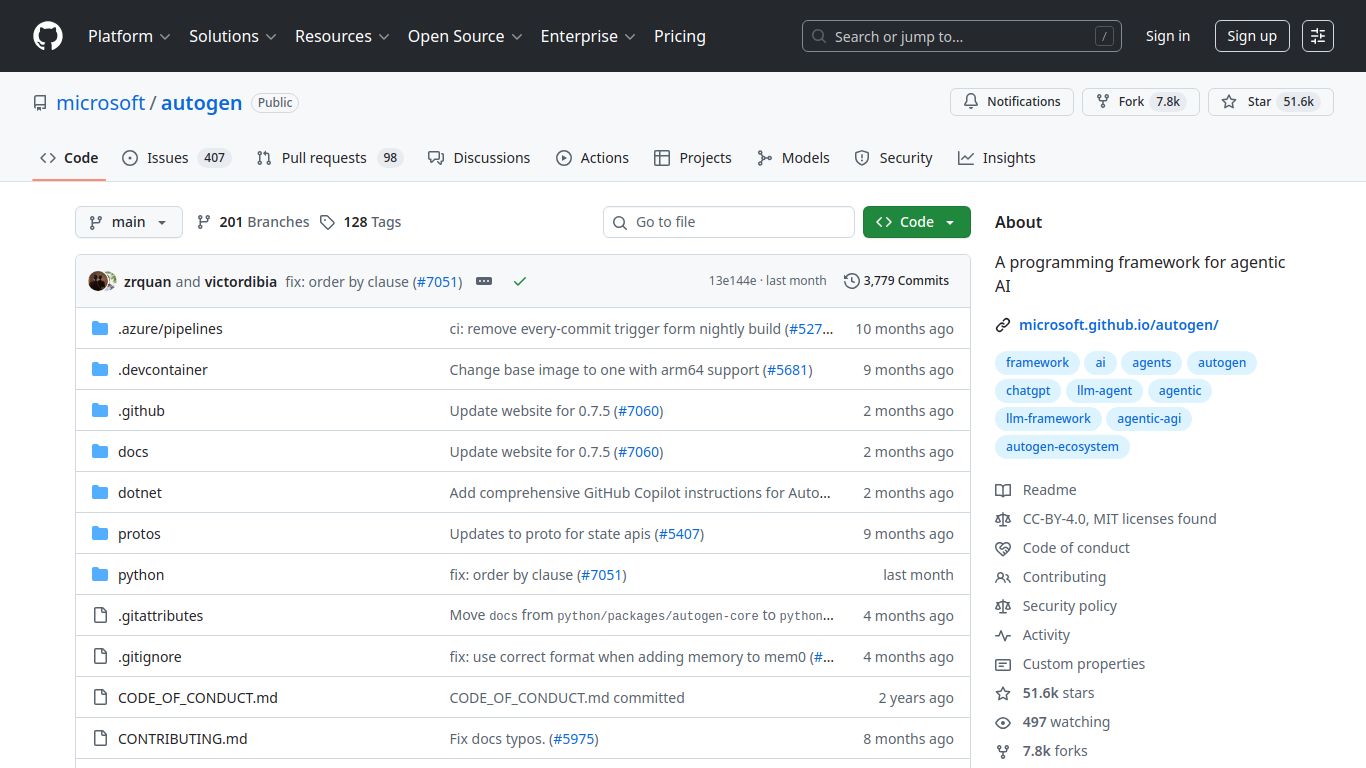
Multi-agent framework enabling agents to converse, plan, and solve tasks with human-in-the-loop.
Ever imagined having a team of specialized AI experts who could collaborate, debate, and work together to solve complex problems? That’s the revolutionary concept behind Microsoft AutoGen. Developed by the tech giant Microsoft, AutoGen isn’t just another AI tool; it’s a powerful open-source framework that allows you to build next-generation applications powered by multiple, conversing Large Language Model (LLM) agents. Instead of a single AI tackling a task, AutoGen enables you to create a dynamic ecosystem where agents with different roles—like a programmer, a code reviewer, a project manager, and a creative writer—can communicate with each other and with humans to achieve sophisticated goals. This multi-agent conversation approach unlocks unprecedented capabilities for automation, problem-solving, and complex workflow creation.
It’s crucial to understand that AutoGen itself doesn’t generate content directly. Instead, it acts as the master conductor, orchestrating other AI models and tools to perform a vast range of tasks. Its power lies in its ability to integrate and automate, making it a versatile platform for building almost any AI-driven application you can imagine.
AutoGen is packed with features designed to give developers maximum flexibility and control over their AI applications.
Here’s the best part: Microsoft AutoGen is a completely free, open-source framework. You can download it from GitHub, modify it, and use it in your personal or commercial projects without any licensing fees or subscription plans. The only costs you’ll incur are for the underlying LLM APIs you choose to use. For example, if you configure your agents to use OpenAI’s GPT-4, you will be responsible for the API usage costs charged by OpenAI. This model provides incredible flexibility, allowing you to control your expenses by choosing from a wide range of paid or even free, self-hosted LLMs.
AutoGen is a developer-centric framework designed for those with technical expertise who want to build sophisticated AI systems. It’s the perfect tool for:
AutoGen operates in a competitive space of AI development frameworks. Here’s how it stacks up against other popular alternatives:
LangChain is a very broad and popular framework for building LLM applications. It offers a wide array of tools for creating chains, managing prompts, and connecting to data sources. While you can build multi-agent systems with LangChain, AutoGen is more specialized and purpose-built for the multi-agent conversation paradigm. Many find AutoGen’s approach to orchestrating agent dialogue more intuitive and streamlined for this specific use case.
CrewAI is another excellent framework focused on orchestrating autonomous AI agents. It emphasizes a role-playing approach where agents have defined roles, goals, and backstories. The choice between AutoGen and CrewAI often comes down to architectural preference. AutoGen offers a highly flexible and general-purpose conversation-based framework, while CrewAI provides a more structured, role-centric methodology for agent collaboration.
LlamaIndex is primarily focused on a different problem: connecting LLMs to your private data. It excels at building Retrieval-Augmented Generation (RAG) applications, where an AI can query and reason over vast document repositories. While AutoGen can incorporate RAG capabilities, its core strength is in agent-to-agent task execution, whereas LlamaIndex’s core strength is in agent-to-data interaction.