LobeChat
Open-source, polished chat framework supporting many providers & local runners; extensible for RP and character presets.
Early-access AI story game: co-create choose-your-own-adventure narratives inside licensed and public-domain worlds.
Educators and Students: An engaging way to bring literature to life in the classroom, encouraging critical thinking and creative writing skills.
Groups of Friends & Families: A perfect choice for a unique and collaborative game night that goes beyond traditional board games or video games.
Fans of Interactive Fiction: For anyone who grew up loving “Choose Your Own Adventure” books, this is the ultimate evolution of the genre.
AI Dungeon is a well-known pioneer in AI-driven text adventures. While both platforms offer open-ended storytelling, Hidden Door differentiates itself with its focus on structured adaptation of existing works and its tightly integrated, high-quality art generation. AI Dungeon offers a more freewheeling, sandbox experience, whereas Hidden Door provides a more cohesive, visually polished, and thematically consistent adventure right out of the box.
NovelAI is primarily a writer’s assistant, excelling at co-writing long-form prose and generating accompanying anime-style art. While it has storytelling modules, its main purpose is to assist a single author. Hidden Door, by contrast, is fundamentally a multiplayer, interactive gaming experience. It’s less about writing a book and more about living inside one with friends.
General-purpose chatbots like ChatGPT can be prompted to run a simple text-based RPG. However, they lack the specialized interface, integrated art, memory persistence, and collaborative features of a dedicated platform like Hidden Door. Hidden Door is a purpose-built tool designed from the ground up for narrative gaming, offering a far more robust and immersive experience without the need for complex prompt engineering.
Tabletop RPG Players & Game Masters: A fantastic tool for impromptu game nights, character backstory exploration, or generating new campaign ideas.
Creative Writers & Authors: Use it to brainstorm plot points, “interview” your characters, or explore your fictional worlds from a new perspective.
Educators and Students: An engaging way to bring literature to life in the classroom, encouraging critical thinking and creative writing skills.
Groups of Friends & Families: A perfect choice for a unique and collaborative game night that goes beyond traditional board games or video games.
Fans of Interactive Fiction: For anyone who grew up loving “Choose Your Own Adventure” books, this is the ultimate evolution of the genre.
AI Dungeon is a well-known pioneer in AI-driven text adventures. While both platforms offer open-ended storytelling, Hidden Door differentiates itself with its focus on structured adaptation of existing works and its tightly integrated, high-quality art generation. AI Dungeon offers a more freewheeling, sandbox experience, whereas Hidden Door provides a more cohesive, visually polished, and thematically consistent adventure right out of the box.
NovelAI is primarily a writer’s assistant, excelling at co-writing long-form prose and generating accompanying anime-style art. While it has storytelling modules, its main purpose is to assist a single author. Hidden Door, by contrast, is fundamentally a multiplayer, interactive gaming experience. It’s less about writing a book and more about living inside one with friends.
General-purpose chatbots like ChatGPT can be prompted to run a simple text-based RPG. However, they lack the specialized interface, integrated art, memory persistence, and collaborative features of a dedicated platform like Hidden Door. Hidden Door is a purpose-built tool designed from the ground up for narrative gaming, offering a far more robust and immersive experience without the need for complex prompt engineering.
Creative Writers & Authors: Use it to brainstorm plot points, “interview” your characters, or explore your fictional worlds from a new perspective.
Educators and Students: An engaging way to bring literature to life in the classroom, encouraging critical thinking and creative writing skills.
Groups of Friends & Families: A perfect choice for a unique and collaborative game night that goes beyond traditional board games or video games.
Fans of Interactive Fiction: For anyone who grew up loving “Choose Your Own Adventure” books, this is the ultimate evolution of the genre.
AI Dungeon is a well-known pioneer in AI-driven text adventures. While both platforms offer open-ended storytelling, Hidden Door differentiates itself with its focus on structured adaptation of existing works and its tightly integrated, high-quality art generation. AI Dungeon offers a more freewheeling, sandbox experience, whereas Hidden Door provides a more cohesive, visually polished, and thematically consistent adventure right out of the box.
NovelAI is primarily a writer’s assistant, excelling at co-writing long-form prose and generating accompanying anime-style art. While it has storytelling modules, its main purpose is to assist a single author. Hidden Door, by contrast, is fundamentally a multiplayer, interactive gaming experience. It’s less about writing a book and more about living inside one with friends.
General-purpose chatbots like ChatGPT can be prompted to run a simple text-based RPG. However, they lack the specialized interface, integrated art, memory persistence, and collaborative features of a dedicated platform like Hidden Door. Hidden Door is a purpose-built tool designed from the ground up for narrative gaming, offering a far more robust and immersive experience without the need for complex prompt engineering.
Creative Writers & Authors: Use it to brainstorm plot points, “interview” your characters, or explore your fictional worlds from a new perspective.
Educators and Students: An engaging way to bring literature to life in the classroom, encouraging critical thinking and creative writing skills.
Groups of Friends & Families: A perfect choice for a unique and collaborative game night that goes beyond traditional board games or video games.
Fans of Interactive Fiction: For anyone who grew up loving “Choose Your Own Adventure” books, this is the ultimate evolution of the genre.
AI Dungeon is a well-known pioneer in AI-driven text adventures. While both platforms offer open-ended storytelling, Hidden Door differentiates itself with its focus on structured adaptation of existing works and its tightly integrated, high-quality art generation. AI Dungeon offers a more freewheeling, sandbox experience, whereas Hidden Door provides a more cohesive, visually polished, and thematically consistent adventure right out of the box.
NovelAI is primarily a writer’s assistant, excelling at co-writing long-form prose and generating accompanying anime-style art. While it has storytelling modules, its main purpose is to assist a single author. Hidden Door, by contrast, is fundamentally a multiplayer, interactive gaming experience. It’s less about writing a book and more about living inside one with friends.
General-purpose chatbots like ChatGPT can be prompted to run a simple text-based RPG. However, they lack the specialized interface, integrated art, memory persistence, and collaborative features of a dedicated platform like Hidden Door. Hidden Door is a purpose-built tool designed from the ground up for narrative gaming, offering a far more robust and immersive experience without the need for complex prompt engineering.
Dynamic Text Generation: At its core, Hidden Door is a master wordsmith. The AI generates rich, descriptive prose, engaging character dialogue, and responsive world events based on player actions. It understands context and nuance, ensuring the story flows naturally no matter how unpredictable your choices are.
Stunning AI-Generated Art: What’s a story without pictures? Hidden Door brings your narrative to life with unique, stylized illustrations generated in real-time. From character portraits to sprawling landscapes and intense action scenes, the AI creates cohesive artwork that perfectly matches the tone and content of your adventure, making the world feel tangible and vibrant.
Interactive World Building: The platform doesn’t just generate static content. It builds a dynamic world model from the source material, allowing you to interact with objects, characters, and locations in meaningful ways. Ask the AI what a character knows or what’s inside a mysterious box, and it will provide an answer consistent with the story’s universe.
What truly sets Hidden Door apart is its thoughtful combination of features designed for creative collaboration and ease of use.
_
As of now, Hidden Door is in an early access phase, inviting users to explore its capabilities. The company has not yet announced its official pricing structure. However, the model is expected to be accessible, likely featuring a free-to-play tier that allows users to experience the core features, with potential premium plans for advanced functionalities, private sessions, or extensive content creation. We will update this section as soon as official pricing details are released.
Hidden Door’s versatile platform appeals to a wide range of creative individuals and groups:
Creative Writers & Authors: Use it to brainstorm plot points, “interview” your characters, or explore your fictional worlds from a new perspective.
Educators and Students: An engaging way to bring literature to life in the classroom, encouraging critical thinking and creative writing skills.
Groups of Friends & Families: A perfect choice for a unique and collaborative game night that goes beyond traditional board games or video games.
Fans of Interactive Fiction: For anyone who grew up loving “Choose Your Own Adventure” books, this is the ultimate evolution of the genre.
AI Dungeon is a well-known pioneer in AI-driven text adventures. While both platforms offer open-ended storytelling, Hidden Door differentiates itself with its focus on structured adaptation of existing works and its tightly integrated, high-quality art generation. AI Dungeon offers a more freewheeling, sandbox experience, whereas Hidden Door provides a more cohesive, visually polished, and thematically consistent adventure right out of the box.
NovelAI is primarily a writer’s assistant, excelling at co-writing long-form prose and generating accompanying anime-style art. While it has storytelling modules, its main purpose is to assist a single author. Hidden Door, by contrast, is fundamentally a multiplayer, interactive gaming experience. It’s less about writing a book and more about living inside one with friends.
General-purpose chatbots like ChatGPT can be prompted to run a simple text-based RPG. However, they lack the specialized interface, integrated art, memory persistence, and collaborative features of a dedicated platform like Hidden Door. Hidden Door is a purpose-built tool designed from the ground up for narrative gaming, offering a far more robust and immersive experience without the need for complex prompt engineering.
Stunning AI-Generated Art: What’s a story without pictures? Hidden Door brings your narrative to life with unique, stylized illustrations generated in real-time. From character portraits to sprawling landscapes and intense action scenes, the AI creates cohesive artwork that perfectly matches the tone and content of your adventure, making the world feel tangible and vibrant.
Interactive World Building: The platform doesn’t just generate static content. It builds a dynamic world model from the source material, allowing you to interact with objects, characters, and locations in meaningful ways. Ask the AI what a character knows or what’s inside a mysterious box, and it will provide an answer consistent with the story’s universe.
What truly sets Hidden Door apart is its thoughtful combination of features designed for creative collaboration and ease of use.
_
As of now, Hidden Door is in an early access phase, inviting users to explore its capabilities. The company has not yet announced its official pricing structure. However, the model is expected to be accessible, likely featuring a free-to-play tier that allows users to experience the core features, with potential premium plans for advanced functionalities, private sessions, or extensive content creation. We will update this section as soon as official pricing details are released.
Hidden Door’s versatile platform appeals to a wide range of creative individuals and groups:
Creative Writers & Authors: Use it to brainstorm plot points, “interview” your characters, or explore your fictional worlds from a new perspective.
Educators and Students: An engaging way to bring literature to life in the classroom, encouraging critical thinking and creative writing skills.
Groups of Friends & Families: A perfect choice for a unique and collaborative game night that goes beyond traditional board games or video games.
Fans of Interactive Fiction: For anyone who grew up loving “Choose Your Own Adventure” books, this is the ultimate evolution of the genre.
AI Dungeon is a well-known pioneer in AI-driven text adventures. While both platforms offer open-ended storytelling, Hidden Door differentiates itself with its focus on structured adaptation of existing works and its tightly integrated, high-quality art generation. AI Dungeon offers a more freewheeling, sandbox experience, whereas Hidden Door provides a more cohesive, visually polished, and thematically consistent adventure right out of the box.
NovelAI is primarily a writer’s assistant, excelling at co-writing long-form prose and generating accompanying anime-style art. While it has storytelling modules, its main purpose is to assist a single author. Hidden Door, by contrast, is fundamentally a multiplayer, interactive gaming experience. It’s less about writing a book and more about living inside one with friends.
General-purpose chatbots like ChatGPT can be prompted to run a simple text-based RPG. However, they lack the specialized interface, integrated art, memory persistence, and collaborative features of a dedicated platform like Hidden Door. Hidden Door is a purpose-built tool designed from the ground up for narrative gaming, offering a far more robust and immersive experience without the need for complex prompt engineering.
Stunning AI-Generated Art: What’s a story without pictures? Hidden Door brings your narrative to life with unique, stylized illustrations generated in real-time. From character portraits to sprawling landscapes and intense action scenes, the AI creates cohesive artwork that perfectly matches the tone and content of your adventure, making the world feel tangible and vibrant.
Interactive World Building: The platform doesn’t just generate static content. It builds a dynamic world model from the source material, allowing you to interact with objects, characters, and locations in meaningful ways. Ask the AI what a character knows or what’s inside a mysterious box, and it will provide an answer consistent with the story’s universe.
What truly sets Hidden Door apart is its thoughtful combination of features designed for creative collaboration and ease of use.
_
As of now, Hidden Door is in an early access phase, inviting users to explore its capabilities. The company has not yet announced its official pricing structure. However, the model is expected to be accessible, likely featuring a free-to-play tier that allows users to experience the core features, with potential premium plans for advanced functionalities, private sessions, or extensive content creation. We will update this section as soon as official pricing details are released.
Hidden Door’s versatile platform appeals to a wide range of creative individuals and groups:
Creative Writers & Authors: Use it to brainstorm plot points, “interview” your characters, or explore your fictional worlds from a new perspective.
Educators and Students: An engaging way to bring literature to life in the classroom, encouraging critical thinking and creative writing skills.
Groups of Friends & Families: A perfect choice for a unique and collaborative game night that goes beyond traditional board games or video games.
Fans of Interactive Fiction: For anyone who grew up loving “Choose Your Own Adventure” books, this is the ultimate evolution of the genre.
AI Dungeon is a well-known pioneer in AI-driven text adventures. While both platforms offer open-ended storytelling, Hidden Door differentiates itself with its focus on structured adaptation of existing works and its tightly integrated, high-quality art generation. AI Dungeon offers a more freewheeling, sandbox experience, whereas Hidden Door provides a more cohesive, visually polished, and thematically consistent adventure right out of the box.
NovelAI is primarily a writer’s assistant, excelling at co-writing long-form prose and generating accompanying anime-style art. While it has storytelling modules, its main purpose is to assist a single author. Hidden Door, by contrast, is fundamentally a multiplayer, interactive gaming experience. It’s less about writing a book and more about living inside one with friends.
General-purpose chatbots like ChatGPT can be prompted to run a simple text-based RPG. However, they lack the specialized interface, integrated art, memory persistence, and collaborative features of a dedicated platform like Hidden Door. Hidden Door is a purpose-built tool designed from the ground up for narrative gaming, offering a far more robust and immersive experience without the need for complex prompt engineering.
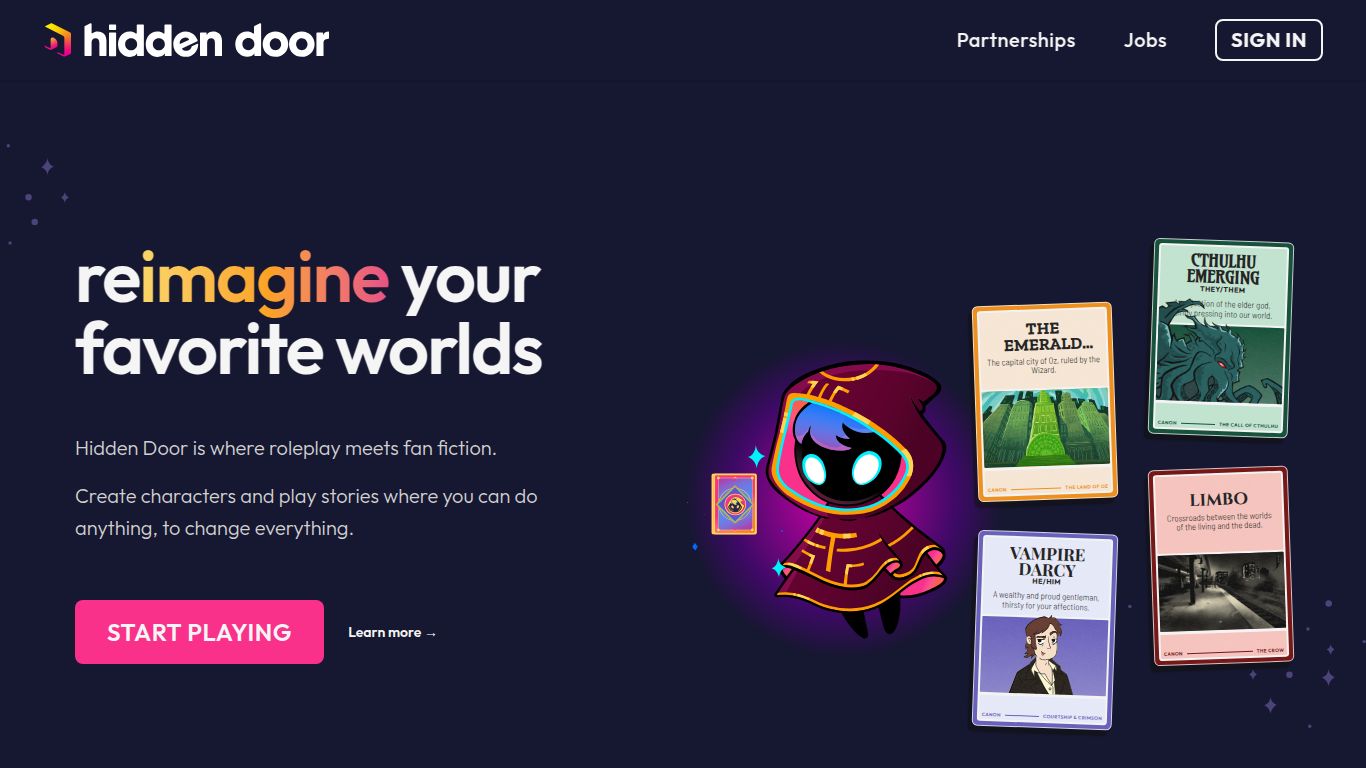
Ever dreamed of stepping into your favorite book, not just as a reader, but as a character who can shape the narrative? Meet Hidden Door, a revolutionary AI tool developed by Hidden Door Co. that transforms any work of fiction—from classic literature to your own original concepts—into a collaborative, interactive role-playing game. It’s not just a game; it’s a living, breathing story engine where you and your friends can explore, create, and experience narratives like never before. Hidden Door acts as your personal AI Game Master, weaving intricate plots and stunning visuals on the fly, making every adventure truly unique.
Hidden Door combines multiple AI modalities to create a seamless and immersive experience. It’s a true multi-talented creator at your fingertips.
Stunning AI-Generated Art: What’s a story without pictures? Hidden Door brings your narrative to life with unique, stylized illustrations generated in real-time. From character portraits to sprawling landscapes and intense action scenes, the AI creates cohesive artwork that perfectly matches the tone and content of your adventure, making the world feel tangible and vibrant.
Interactive World Building: The platform doesn’t just generate static content. It builds a dynamic world model from the source material, allowing you to interact with objects, characters, and locations in meaningful ways. Ask the AI what a character knows or what’s inside a mysterious box, and it will provide an answer consistent with the story’s universe.
What truly sets Hidden Door apart is its thoughtful combination of features designed for creative collaboration and ease of use.
_
As of now, Hidden Door is in an early access phase, inviting users to explore its capabilities. The company has not yet announced its official pricing structure. However, the model is expected to be accessible, likely featuring a free-to-play tier that allows users to experience the core features, with potential premium plans for advanced functionalities, private sessions, or extensive content creation. We will update this section as soon as official pricing details are released.
Hidden Door’s versatile platform appeals to a wide range of creative individuals and groups:
Creative Writers & Authors: Use it to brainstorm plot points, “interview” your characters, or explore your fictional worlds from a new perspective.
Educators and Students: An engaging way to bring literature to life in the classroom, encouraging critical thinking and creative writing skills.
Groups of Friends & Families: A perfect choice for a unique and collaborative game night that goes beyond traditional board games or video games.
Fans of Interactive Fiction: For anyone who grew up loving “Choose Your Own Adventure” books, this is the ultimate evolution of the genre.
AI Dungeon is a well-known pioneer in AI-driven text adventures. While both platforms offer open-ended storytelling, Hidden Door differentiates itself with its focus on structured adaptation of existing works and its tightly integrated, high-quality art generation. AI Dungeon offers a more freewheeling, sandbox experience, whereas Hidden Door provides a more cohesive, visually polished, and thematically consistent adventure right out of the box.
NovelAI is primarily a writer’s assistant, excelling at co-writing long-form prose and generating accompanying anime-style art. While it has storytelling modules, its main purpose is to assist a single author. Hidden Door, by contrast, is fundamentally a multiplayer, interactive gaming experience. It’s less about writing a book and more about living inside one with friends.
General-purpose chatbots like ChatGPT can be prompted to run a simple text-based RPG. However, they lack the specialized interface, integrated art, memory persistence, and collaborative features of a dedicated platform like Hidden Door. Hidden Door is a purpose-built tool designed from the ground up for narrative gaming, offering a far more robust and immersive experience without the need for complex prompt engineering.