V7 Darwin
Professional CV labeling with model-in-the-loop and medical/video tooling.
Dataset management and curation—debug models, fix labels, and improve data quality.
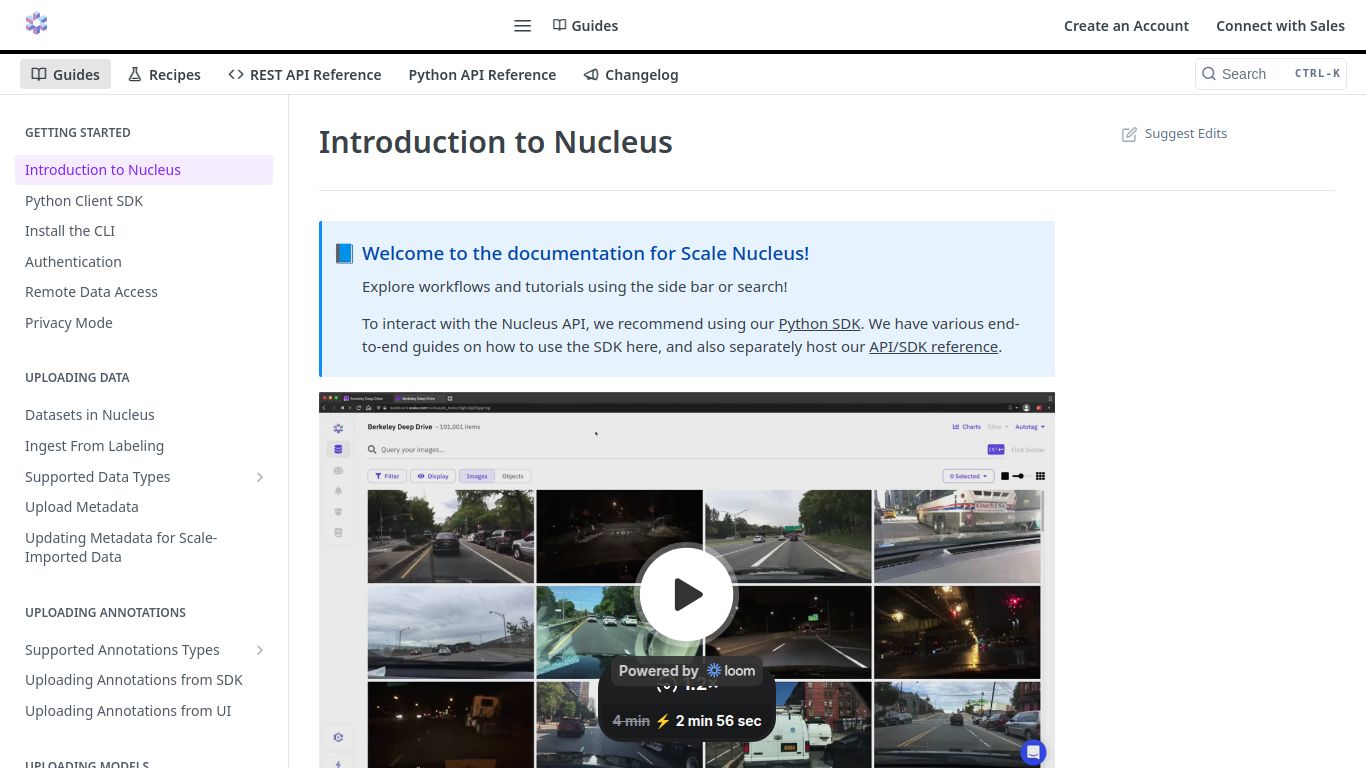
In the complex world of artificial intelligence, the quality of your data and the performance of your models are paramount. Enter Scale Nucleus, a powerful platform developed by the industry-leading data infrastructure company, Scale AI. Nucleus isn’t just a data viewer; it’s a comprehensive, interactive toolkit designed to help machine learning teams curate better datasets, debug models with precision, and accelerate the entire AI development lifecycle. It provides a unified environment to explore, visualize, and understand your data and model behavior in ways that were previously fragmented and time-consuming.
Scale Nucleus is engineered to handle the diverse data types that modern AI systems rely on. It offers robust support for visualizing and interacting with various data formats, making it a truly versatile solution.
Nucleus is packed with features that move beyond simple data viewing, empowering teams with actionable insights.
Forget manually sifting through millions of data points. Nucleus offers powerful search capabilities, including filtering by metadata, annotations, and even model predictions. Its most powerful feature is semantic search, allowing you to find visually similar images or data points to quickly identify edge cases and balance your datasets.
Pinpoint exactly where and why your model is failing. With Nucleus, you can easily create “slices” of data where your model performs poorly (e.g., rainy conditions, low-light scenes). Compare different model versions side-by-side on the same data to track progress and regressions with undeniable clarity.
AI development is a team sport. Nucleus facilitates collaboration by allowing users to save and share specific data slices, queries, and insights with teammates. This streamlines communication between engineers, data labelers, and product managers, ensuring everyone is on the same page.
As a Scale AI product, Nucleus integrates flawlessly with Scale’s data labeling and management pipelines. You can send interesting data found in Nucleus directly for relabeling or create new labeling projects based on model failures, closing the loop in the data engine.
Scale Nucleus is an enterprise-grade solution, and its pricing reflects that. You won’t find standard “Free,” “Pro,” or “Business” tiers listed on their website. Instead, they operate on a custom pricing model. The cost is typically based on a combination of factors, including:
To get pricing information, you will need to contact the Scale AI sales team to schedule a demo and receive a personalized quote tailored to your organization’s unique requirements.
Nucleus is designed for professionals who are deeply involved in the operational side of building and deploying AI models.
While Nucleus is a powerhouse, it’s helpful to know the competitive landscape.
FiftyOne is the leading open-source alternative. It’s incredibly powerful and flexible, offering many similar data visualization and exploration features. It’s an excellent choice for individual researchers or teams with the technical expertise to host and manage the tool themselves. However, it lacks the seamless integration with a managed data labeling service and the enterprise-level support that Scale Nucleus provides.
W&B is a popular MLOps platform primarily known for experiment tracking. While it includes tools for visualizing data and model predictions (W&B Tables), its core focus is on the experiment itself. Nucleus, by contrast, is more deeply focused on the entire data-centric lifecycle, from initial curation and exploration to granular, post-training model debugging.
Aquarium is another commercial tool in this space that focuses on finding model failures and improving dataset quality, particularly for computer vision. It shares a similar philosophy with Nucleus. The key differentiator often comes down to the user experience, specific features, and, most importantly, Nucleus’s native integration into the broader Scale AI data engine, which is a significant advantage for teams already using or considering Scale for data annotation.