IBM Watson Text-to-Speech: Giving Your Applications a Voice
In a world where digital interaction is key, the quality of automated voices can make or break the user experience. Step into the future of audio with IBM Watson Text-to-Speech, a cutting-edge service from the tech giant IBM. This powerful tool isn’t just about converting text to audio; it’s about creating natural, smooth, and expressive speech that can be seamlessly integrated into any application, engaging users on a whole new level.
Core Capabilities: Beyond Simple Narration
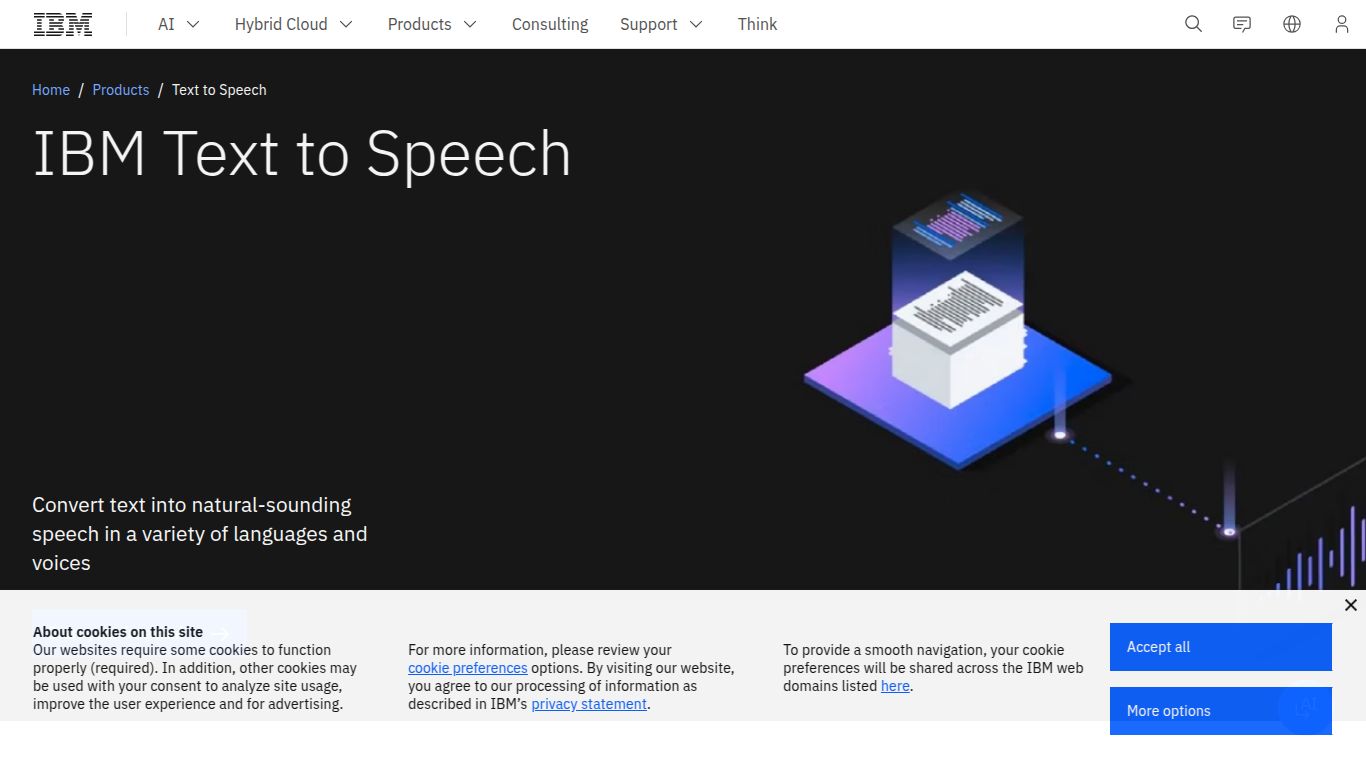
While some tools dabble in various AI fields, IBM Watson Text-to-Speech has a singular, laser-focused mission: mastering the art of speech synthesis. Its core capability is transforming written text into high-quality, audible speech. It doesn’t generate images or videos; instead, it perfects the audio experience, providing a robust foundation for applications that need to speak directly to their users.
Features That Make a Difference
- Advanced Neural Voices: Forget robotic, monotonous tones. Watson utilizes deep neural networks to produce voices that are remarkably human-like, with realistic intonation and clarity. It offers a library of different voices, including expressive and conversational styles to match your brand’s personality.
- Real-Time Synthesis: The service is optimized for speed, delivering synthesized audio with minimal latency. This makes it perfect for interactive applications like chatbots, voice-activated assistants, and customer service call centers.
- Deep Voice Customization: Go beyond default settings. Using Speech Synthesis Markup Language (SSML), developers have granular control over the output. You can adjust pitch, speed, volume, add pauses, and even specify pronunciations to ensure every word sounds exactly as intended.
- Multi-Language and Dialect Support: Reach a global audience with ease. The service supports a wide array of languages and dialects, allowing you to create localized experiences for users around the world.
- Secure and Scalable: Built on the reliable IBM Cloud, this service is designed for enterprise-level use. It offers the security, scalability, and performance that businesses demand for their critical applications.
Pricing: Plans for Every Scale
IBM offers a flexible, tiered pricing model that caters to everyone from individual developers to large corporations. This pay-as-you-go approach ensures you only pay for what you use.
Lite Plan
Price: Free
Perfect for getting started, this plan includes a generous monthly allowance of free characters, allowing you to build and test your applications without any initial investment.
Standard Plan
Price: Pay-as-you-go
As your needs grow, you can seamlessly transition to the Standard plan. You are billed per one thousand characters processed, making it a cost-effective solution that scales with your user base.
Premium & Custom Plans
Price: Custom
For large-scale enterprise deployments with specific security or performance requirements, IBM offers Premium and custom-tailored plans with dedicated support and advanced features.
Who Is It For? The Ideal User Profile
- Application Developers: The primary audience. Anyone building apps that require voice output, from mobile apps to complex IVR systems.
- Businesses & Enterprises: Companies looking to enhance customer service automation, create voice-driven brand experiences, or improve accessibility.
- Content Creators: Podcasters, educators, and video producers who need high-quality voiceovers for their material without hiring voice actors.
- Accessibility Specialists: Professionals developing solutions to help visually impaired users interact with digital content.
- IoT Innovators: Creators of smart devices that need a clear and reliable voice to communicate with users.
Alternatives & Competitive Landscape
The text-to-speech market is competitive, with several major players. Here’s how IBM Watson holds its ground:
- Google Cloud Text-to-Speech: A direct competitor known for its high-fidelity WaveNet voices. The choice between Google and IBM often comes down to the specific voice quality preferred and integration with their respective cloud ecosystems.
- Amazon Polly: Another giant in the space, Amazon Polly is praised for its wide variety of voices and straightforward API. IBM Watson often differentiates itself with its deep SSML customization and enterprise-grade security features.
- Microsoft Azure Text to Speech: Part of the Azure Cognitive Services suite, it also offers very natural-sounding neural voices. Microsoft’s strength lies in its tight integration with the Windows and Azure platforms, while IBM is known for its cross-platform robustness.
In summary, while alternatives offer excellent quality, IBM Watson Text-to-Speech is a top-tier choice for developers and businesses that prioritize reliability, security, and deep customization for mission-critical applications. Its powerful neural voices and flexible API make it a formidable tool for bringing any text to life.