Data.gov: Your Gateway to U.S. Open Data
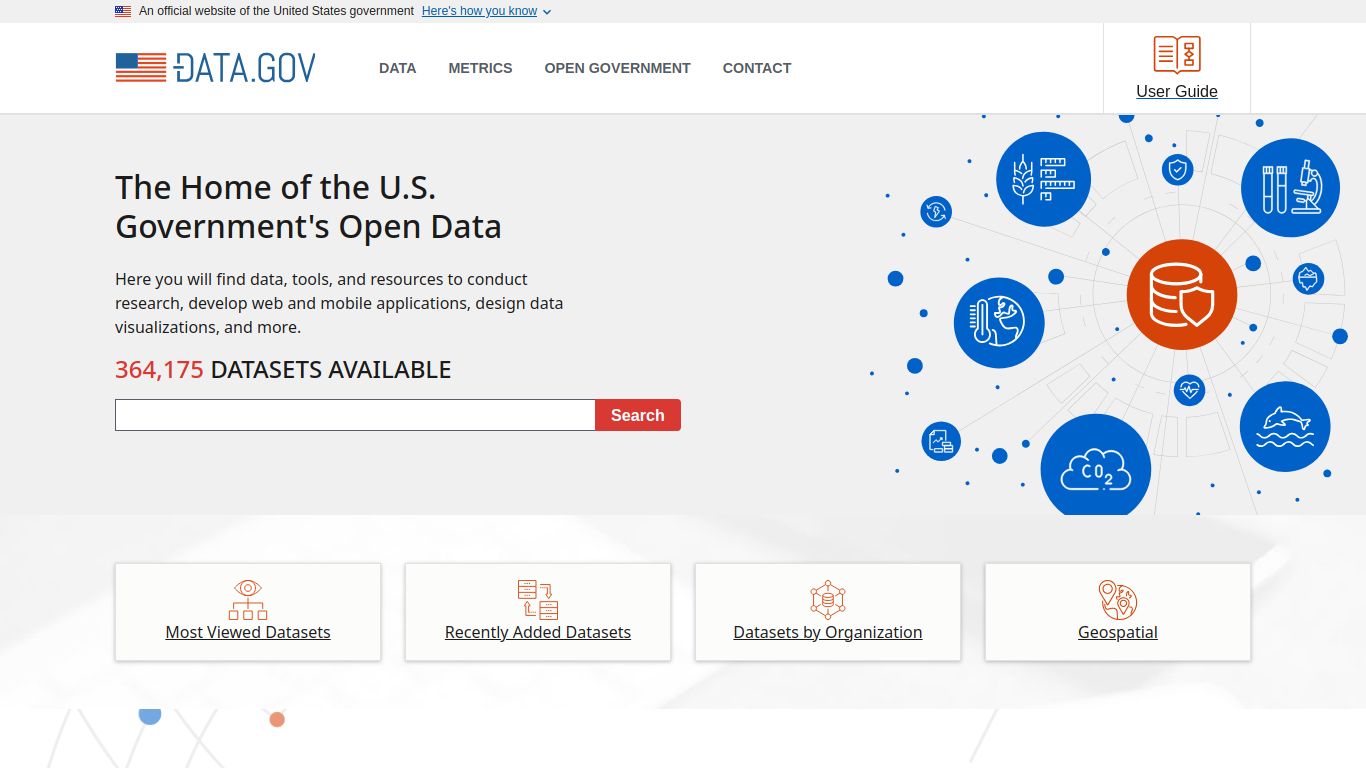
Welcome to the ultimate resource for public data in the United States. Data.gov is the official open data portal of the U.S. federal government, a massive digital library designed to unlock the power of information for everyone. Managed by the U.S. General Services Administration’s Technology Transformation Services, its core mission is to promote transparency, foster innovation, and empower citizens, researchers, and businesses by providing free and easy access to a wealth of government datasets. It serves as the central hub for discovering and utilizing data on topics ranging from economic trends and public health to climate change and agricultural production.
Unlocking Data-Driven Capabilities
While Data.gov is not a generative AI tool for creating content like images or text, it is the foundational engine that powers countless AI and data analysis projects. It provides the high-quality raw material—the data—that models and applications need to generate insights, predictions, and visualizations.
Comprehensive Data Discovery
Data.gov allows you to search, filter, and access hundreds of thousands of datasets from federal, state, and local government agencies. This isn’t about creating new content; it’s about providing the building blocks for discovery. You can find data related to:
- Economy & Finance: Economic indicators, trade statistics, and government spending.
- Health & Human Services: Public health trends, clinical trial data, and healthcare provider information.
- Science & Research: Climate data, geological surveys, and space exploration missions from agencies like NASA and NOAA.
- Public Safety & Law: Crime statistics, traffic data, and judicial records.
Foundation for Analysis & Visualization
The datasets downloaded from Data.gov are the perfect fuel for powerful data analysis and visualization tools. Users can feed this data into platforms like Tableau, Power BI, or Python libraries (Pandas, Matplotlib) to create compelling charts, graphs, and dashboards that reveal hidden patterns and trends.
API for Developers
For developers and businesses, Data.gov provides robust API access. This allows you to programmatically integrate real-time government data directly into your applications, services, or AI models, enabling the creation of innovative new products.
Key Features
- Vast Data Catalog: With over 200,000 datasets and counting, it is one of the most extensive public data repositories in the world.
- Advanced Search & Filtering: Easily narrow down your search by topic, agency, data format, location, and tags to find exactly what you need.
- Multiple Data Formats: Datasets are available in a variety of machine-readable formats, including CSV, JSON, XML, Shapefile, and more, ensuring compatibility with most software.
- Rich Metadata: Every dataset is accompanied by detailed metadata, explaining its source, update frequency, and column definitions, which is crucial for accurate analysis.
- Developer Resources: A dedicated section for developers includes API documentation and tools to facilitate the integration of data into applications.
- Community & Engagement: The platform features communities and forums where users can discuss data, ask questions, and share how they’ve used the data to create value.
Pricing: Completely Free Access
As a core component of the U.S. government’s commitment to transparency and open access, Data.gov is 100% free for all users. There are no subscription plans, no usage tiers, and no hidden fees. All datasets, tools, and resources on the platform are available to the public without any cost, making it an invaluable resource for everyone from students to enterprise-level corporations.
Who is Data.gov For?
- Researchers & Academics: Sourcing authoritative data for studies, papers, and academic projects across countless disciplines.
- Data Scientists & Analysts: Acquiring high-quality, official datasets for building predictive models, performing market analysis, and generating business intelligence.
- Journalists: Fueling data-driven journalism with verifiable statistics and information to support their stories and investigations.
- Developers & Entrepreneurs: Building innovative applications and services that leverage public data, from mapping tools to financial tech solutions.
- Students & Educators: Providing a real-world resource for learning about data analysis, statistics, and civics.
- Policymakers & Government Agencies: Using cross-agency data to inform policy decisions and improve public services.
Alternatives & Comparison
While Data.gov is unique in its focus on U.S. official data, there are other platforms where public and private datasets can be found.
Other Government & Supranational Portals
- The World Bank Open Data: Offers a massive collection of global development data from countries around the world.
- data.europa.eu: The official portal for European data, consolidating datasets from EU institutions and member states.
- data.gov.uk: The United Kingdom’s equivalent, providing data from UK central government, local authorities, and public bodies.
Commercial & Community Platforms
- Google Dataset Search: A search engine that helps users find datasets stored across thousands of repositories on the web.
- Kaggle: A platform known for its data science competitions, which also hosts a large collection of user-contributed and public datasets.
- Nasdaq Data Link (formerly Quandl): A marketplace for financial, economic, and alternative datasets, offering both free and premium data.
Conclusion: While alternatives offer broader or more specialized datasets, Data.gov remains the gold standard and the single source of truth for official, high-quality data from the United States government. Its commitment to free, unrestricted access and its unparalleled authority make it an essential tool for anyone whose work relies on credible, U.S.-based information.